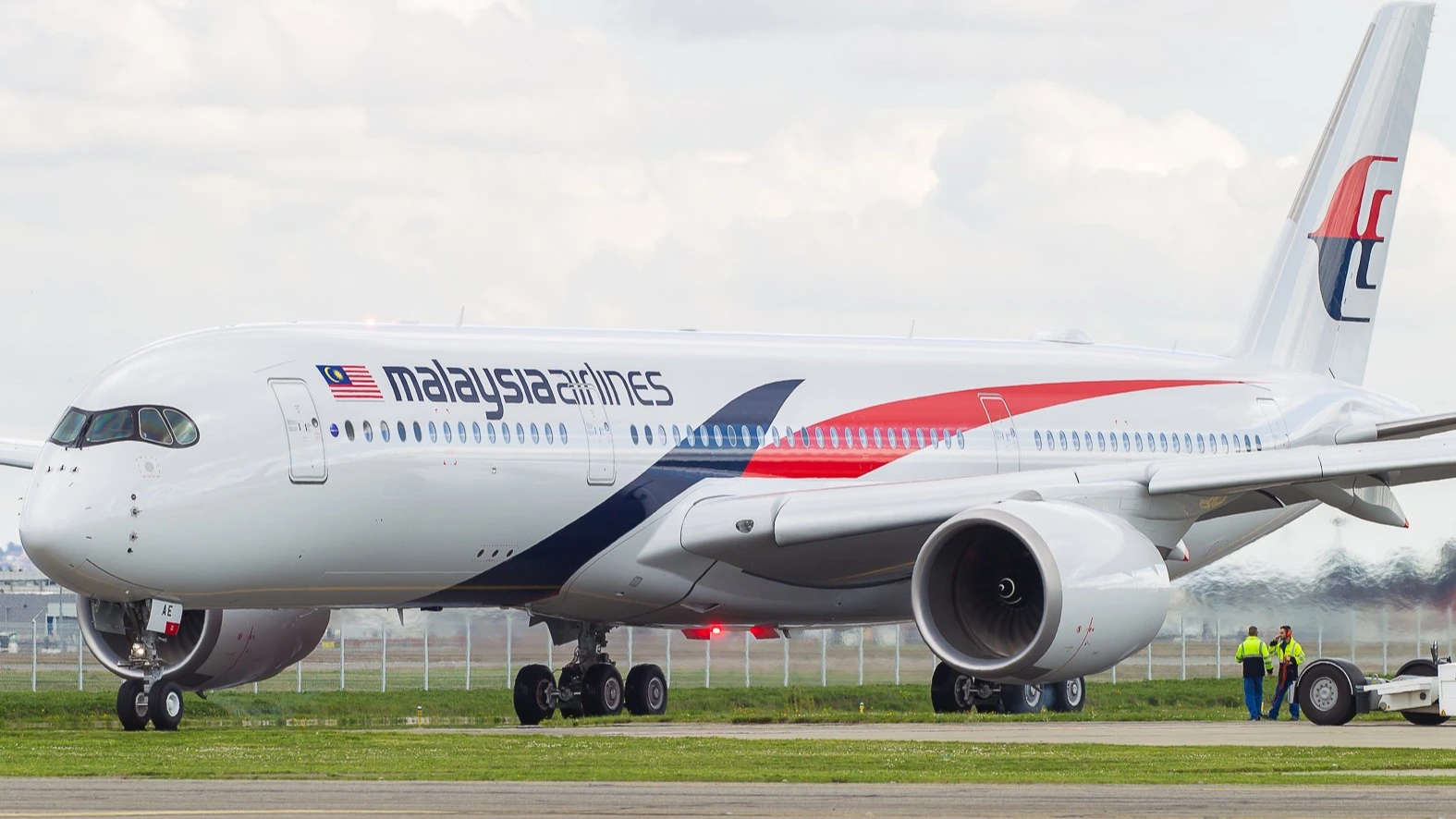
PARIS — A Malaysia Airlines long-haul flight from Paris to Kuala Lumpur was forced to make an emergency return to its departure airport after pilots detected a technical issue shortly after takeoff, aviation officials confirmed.
Malaysia Airlines flight MH21, operated by an Airbus A350, departed Paris Charles de Gaulle Airport (CDG) later than scheduled due to adverse winter weather, including snowfall that disrupted airport operations.
The aircraft eventually took off at 11:55 a.m. local time, around 45 minutes behind schedule, beginning what was expected to be a routine intercontinental journey to Kuala Lumpur International Airport (KUL).
Shortly after departure, however, the flight crew identified an anomaly linked to the aircraft’s guidance system, a critical component that supports automated flight management.
The system integrates the autopilot and flight management computer, assisting pilots with altitude control, speed regulation, navigation, and vertical flight planning—functions that are especially important during long-haul operations.
Flight tracking data indicates that the Airbus A350, registered as 9M-MAB, halted its climb at approximately 4,572 meters while flying over central France.
As a precautionary measure, the crew declared an emergency by transmitting squawk 7700, the internationally recognized transponder code signaling a general emergency.
Following the declaration, air traffic control immediately prioritized the aircraft and coordinated its safe return to Paris. The flight remained within French airspace throughout the diversion, flying controlled holding patterns for several hours to burn off excess fuel and reduce landing weight, a standard procedure for widebody aircraft on long-distance routes.
After completing the fuel management process, the aircraft returned to Charles de Gaulle Airport, landing safely at 3:36 p.m. local time. Emergency services were placed on standby as a precaution, but no injuries were reported among passengers or crew.
Travelers disembarked normally after arrival, and the aircraft was taken out of service for a detailed technical inspection.
Malaysia Airlines said safety remains its highest priority and confirmed that the decision to return to Paris was made in accordance with established aviation safety protocols.
Pilots are trained to operate aircraft manually in the event of automation issues, but any irregularity involving critical flight systems typically warrants a precautionary diversion, particularly on long-haul flights.
The incident caused operational disruption for passengers, many of whom faced delays and rebooking arrangements. However, aviation experts noted that the outcome underscored the effectiveness of modern safety systems, crew training, and international air traffic coordination.
While the airline has not released further technical details, the safe return of the aircraft highlights how early detection and decisive action remain central to commercial aviation safety, even when unexpected issues arise shortly after takeoff.