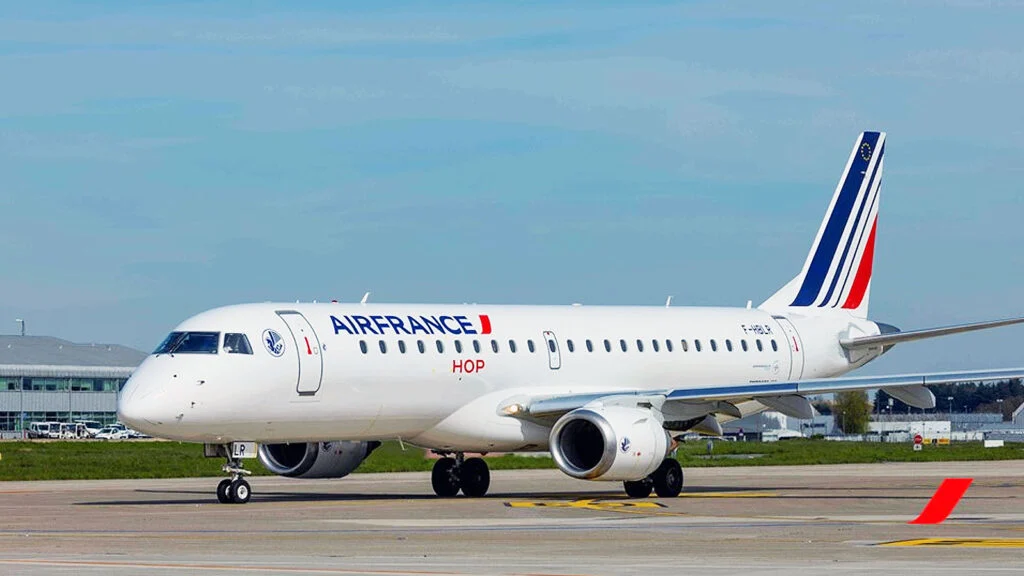
France, Île-de-France – Air France exits Paris-Orly Airport, transferring domestic routes to Transavia France while strengthening its global operations hub at Charles de Gaulle
In a landmark shift for the French aviation sector, Air France officially ceased its operations at Paris-Orly Airport on March 29, 2026, bringing an end to decades of history at the airport once considered its primary gateway.
The move marks a strategic pivot as the airline consolidates operations at Paris-Charles de Gaulle Airport, reinforcing its role as a central international hub while reshaping its domestic and regional network.
For generations, Orly served as the beating heart of Air France’s domestic operations, connecting Paris to major cities across mainland France and overseas territories. The withdrawal signifies not just a logistical adjustment but a symbolic closing chapter in the airline’s evolution.
Until late March, Air France maintained strong domestic connectivity from Orly, operating high-frequency routes linking Paris with Marseille, Nice, and Toulouse. The airline also served long-haul domestic routes to French overseas regions such as Guadeloupe, Martinique, and La Réunion, alongside connections to Corsica.
However, the responsibility for most of these domestic services has now transitioned to Transavia France, the group’s low-cost arm. The transfer is part of a broader restructuring strategy first outlined in 2023, aimed at streamlining operations and improving competitiveness in a rapidly evolving aviation market.
On the very day Air France exited Orly, Transavia France launched its new domestic operations, inaugurating routes to Nice, Marseille, and Toulouse. The airline operated 18 flights on its first day, signaling an immediate and robust start to its expanded presence at the airport.
Speaking at the inauguration ceremony, Transavia France CEO Olivier Mazzucchelli highlighted the importance of the move, emphasizing that the strong demand witnessed from day one validated the airline’s positioning. The focus, he noted, is on maintaining high service standards while offering competitive pricing and efficient schedules.
Transavia now operates up to eight daily flights to both Nice and Toulouse, and up to two daily services to Marseille. The airline has also expanded its network to include daily connections from Orly to cities such as Biarritz, Montpellier, Perpignan, and Toulon.
In parallel, Air France has reinforced its domestic connectivity from Charles de Gaulle. The airline now offers up to 12 daily flights to Nice and Toulouse, and up to 10 to Marseille, ensuring continuity for passengers while centralizing operations at its main hub.
A key feature of Transavia’s offering is its effort to attract business travelers who were previously loyal to Air France’s full-service model. The introduction of the “MAX” fare provides enhanced flexibility, including free same-day flight changes up to one hour before departure, along with priority check-in and boarding.
This flexibility aims to meet the needs of professionals facing unpredictable schedules, allowing them to adjust travel plans without additional costs. The airline has also integrated these services with the Flying Blue loyalty program, ensuring continuity for frequent flyers.
Passengers can currently modify bookings through digital platforms, with additional airport-based services expected in the coming months. A new Transavia lounge at Orly is also scheduled to open on May 6, 2026, further enhancing the customer experience.
Despite the sweeping changes, Air France will maintain a limited presence at Orly through its Corsica routes. These services are operated under a public service delegation and are subsidized by more than €100 million annually to ensure territorial continuity. The arrangement is expected to remain in place until at least 2027.
The airline’s exit from Orly comes as part of a broader realignment of its global network. For the Summer 2026 season, Air France plans to serve nearly 170 destinations across 73 countries, reflecting a continued focus on long-haul expansion and international connectivity.
Long-haul capacity is set to grow by approximately 2%, driven primarily by increased services to North and South America. Among the notable additions is a new direct route between Paris-Charles de Gaulle and Las Vegas, launching in April 2026 with three weekly flights.
In North America, frequencies to New York-Newark are expected to double from June, underscoring the airline’s commitment to one of its most important transatlantic markets.
At the same time, Air France has adjusted its network in response to geopolitical developments. Flights to Tel Aviv, Beirut, Dubai, and Riyadh remain suspended due to ongoing security concerns and airspace restrictions linked to tensions in the Middle East.
Conversely, the airline is expanding its footprint in Asia, deploying larger aircraft and increasing frequencies to key destinations including Bangkok, Singapore, Delhi, Mumbai, Bengaluru, Tokyo, and Osaka.
Air France is also continuing to invest in its premium offerings. The rollout of its La Première suite is progressing, with plans to extend availability to additional long-haul destinations such as Abidjan and San Francisco.
Meanwhile, the introduction of ultra-high-speed Wi-Fi across the fleet is advancing steadily. By the end of March 2026, approximately 40% of aircraft had been equipped, with full deployment targeted by the end of the year.
Across its short- and medium-haul network, Air France will operate up to 630 daily flights to more than 90 destinations. Capacity increases are planned on several European and Mediterranean routes, including Dublin, London-Gatwick, Marrakech, Rabat, Naples, Seville, and Porto.
The consolidation of operations at Charles de Gaulle is expected to enhance efficiency, improve connectivity, and strengthen Air France’s competitive position in the global aviation market. By centralizing its Paris operations, the airline aims to optimize transfers and streamline passenger flows.
For Orly, the transition marks a new chapter. With Transavia France set to operate 230 routes to 109 destinations across 33 countries during the summer season, the airport is poised to become a major hub for low-cost travel in Europe.
Industry analysts view the move as reflective of broader trends in aviation, where legacy carriers increasingly rely on low-cost subsidiaries to handle short-haul routes, allowing them to focus on more profitable long-haul operations.
While the departure of Air France from Orly may evoke nostalgia among travelers and aviation enthusiasts, it also represents a forward-looking strategy designed to ensure the airline’s long-term sustainability and growth in a competitive global landscape.
This article was created using automation technology and was thoroughly edited and fact-checked by one of our editorial staff members