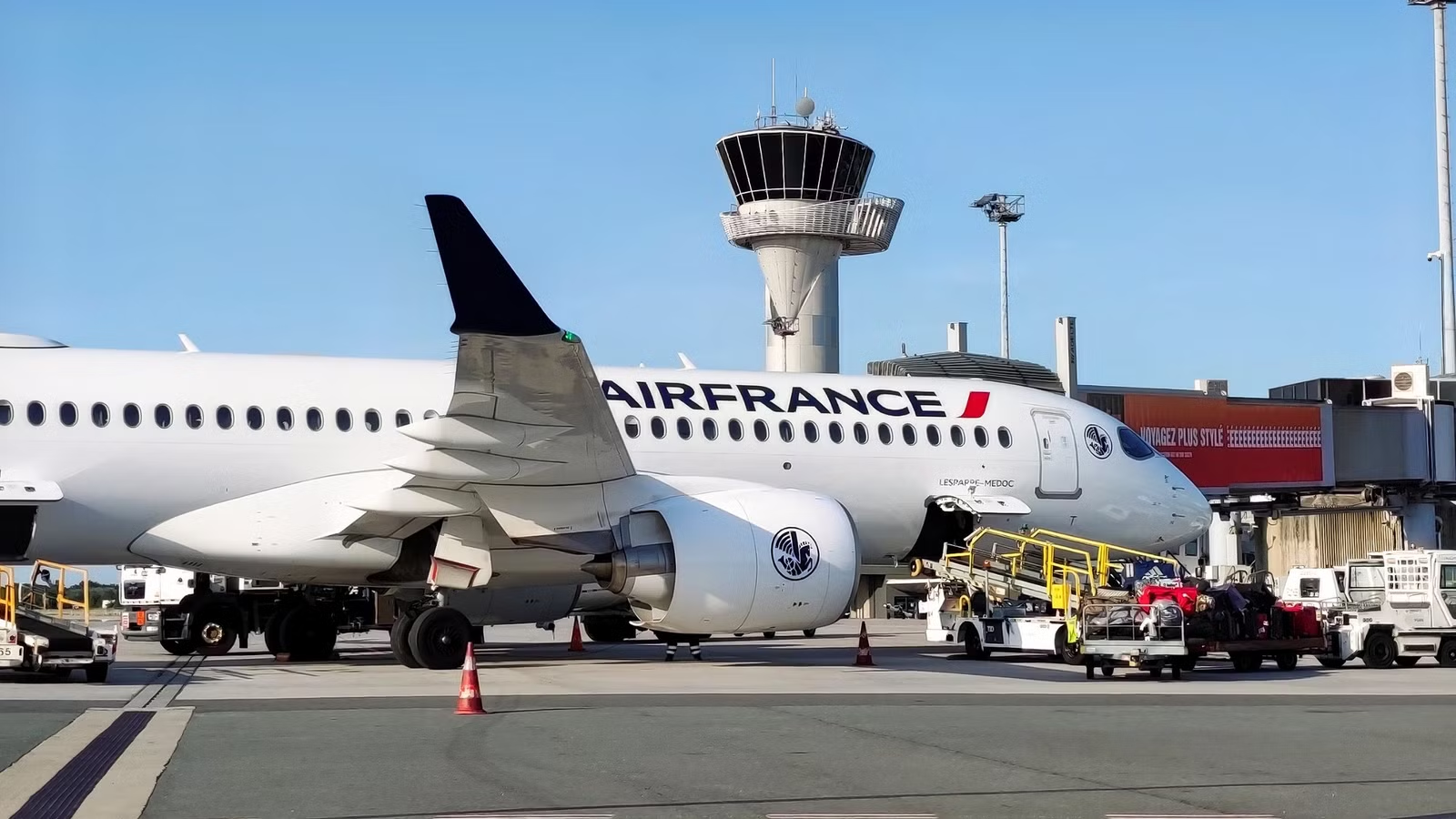
UNITED KINGDOM, ENGLAND: Air France relaunches Gatwick operations with A220 flights to Paris, targeting congestion relief and expanding European connectivity for travelers
Air France has announced a strategic return to London Gatwick Airport, unveiling a renewed route to Paris Charles de Gaulle Airport set to launch on March 29, 2026. The move signals a shift in the airline’s UK operations, as it seeks to capitalize on demand for less congested travel options outside London Heathrow Airport.
The new service will be operated using the modern Airbus A220-300, offering passengers a more efficient and comfortable travel experience. Air France’s decision to reintroduce Gatwick flights reflects a broader industry trend favoring secondary airports to ease pressure on major hubs.
The airline previously operated routes from Gatwick but withdrew during a period of consolidation. Its return underscores renewed confidence in UK-France travel demand, particularly as passenger numbers rebound and diversify across multiple airports.
Air France executives say Gatwick provides operational advantages that Heathrow cannot match, primarily due to capacity constraints and slot limitations. With fewer daily movements, Gatwick allows for quicker turnaround times, shorter queues, and more predictable schedules for both business and leisure travelers.
Passengers flying through Gatwick are expected to benefit from faster security checks and reduced congestion, improving overall journey times. This advantage is particularly significant for travelers connecting onward through Paris, one of Europe’s largest aviation hubs.
At Paris Charles de Gaulle Airport, Air France offers access to an extensive global network, with connections spanning North Africa, the Middle East, Asia, and North America. The airline’s partnership within the SkyTeam alliance further enhances connectivity options.
The choice of the Airbus A220-300 highlights Air France’s focus on efficiency and sustainability. The aircraft consumes significantly less fuel than older regional jets while delivering a quieter cabin and improved passenger comfort. Configured with 148 seats across business, premium economy, and economy classes, it balances capacity with cost efficiency.
Daily flights will include both morning and evening departures from Gatwick and Paris, designed to accommodate a mix of business travelers and leisure passengers. This schedule also supports seamless connections for long-haul flights departing from Paris.
Industry analysts note that the move aligns with broader aviation trends, where airlines are increasingly leveraging secondary airports to optimize operations and reduce reliance on congested hubs like Heathrow. The strategy also enables carriers to offer more competitive fares.
Air France has introduced introductory pricing starting at €89 one-way, with round-trip fares beginning at €178. These prices are positioned below comparable Heathrow-based services, reflecting a competitive push to attract both price-sensitive travelers and frequent flyers.
The airline is also offering flexible booking options, including no change fees for certain reservations made before April 30, 2026. This approach is aimed at boosting early demand and providing reassurance to travelers in a still-evolving aviation landscape.
For passengers in southern England and surrounding regions, Gatwick’s location presents a practical advantage. Reduced travel time to the airport compared to Heathrow can translate into both cost and time savings, making the route particularly appealing for short-haul business trips.
Gatwick itself has undergone significant upgrades in recent years, including improved terminal facilities, expanded retail options, and enhanced passenger services. These investments are expected to support the increased traffic generated by Air France’s return.
Travel experts suggest that the reintroduction of Gatwick services could reshape the competitive dynamics of the London aviation market. By offering an alternative to Heathrow, Air France may encourage other carriers to reconsider their own airport strategies.
The move is also expected to benefit the broader UK-France travel corridor, strengthening economic and tourism links between the two countries. Increased flight availability and competitive pricing could stimulate demand, particularly for weekend leisure travel and short business trips.
Environmental considerations also play a role in the airline’s strategy. The Airbus A220’s reduced emissions and noise footprint align with growing industry and regulatory pressure to adopt more sustainable aviation practices.
Passengers are advised to confirm their departure terminal at Gatwick in advance, as the airport operates both North and South terminals. Arriving at least 2.5 hours before departure is recommended to ensure a smooth travel experience.
Air France’s return to Gatwick marks a significant development in European aviation, highlighting the evolving role of secondary airports in meeting modern travel demands. As congestion continues to challenge major hubs, such strategic shifts may become increasingly common across the industry.
This article was created using automation technology and was thoroughly edited and fact-checked by one of our editorial staff members