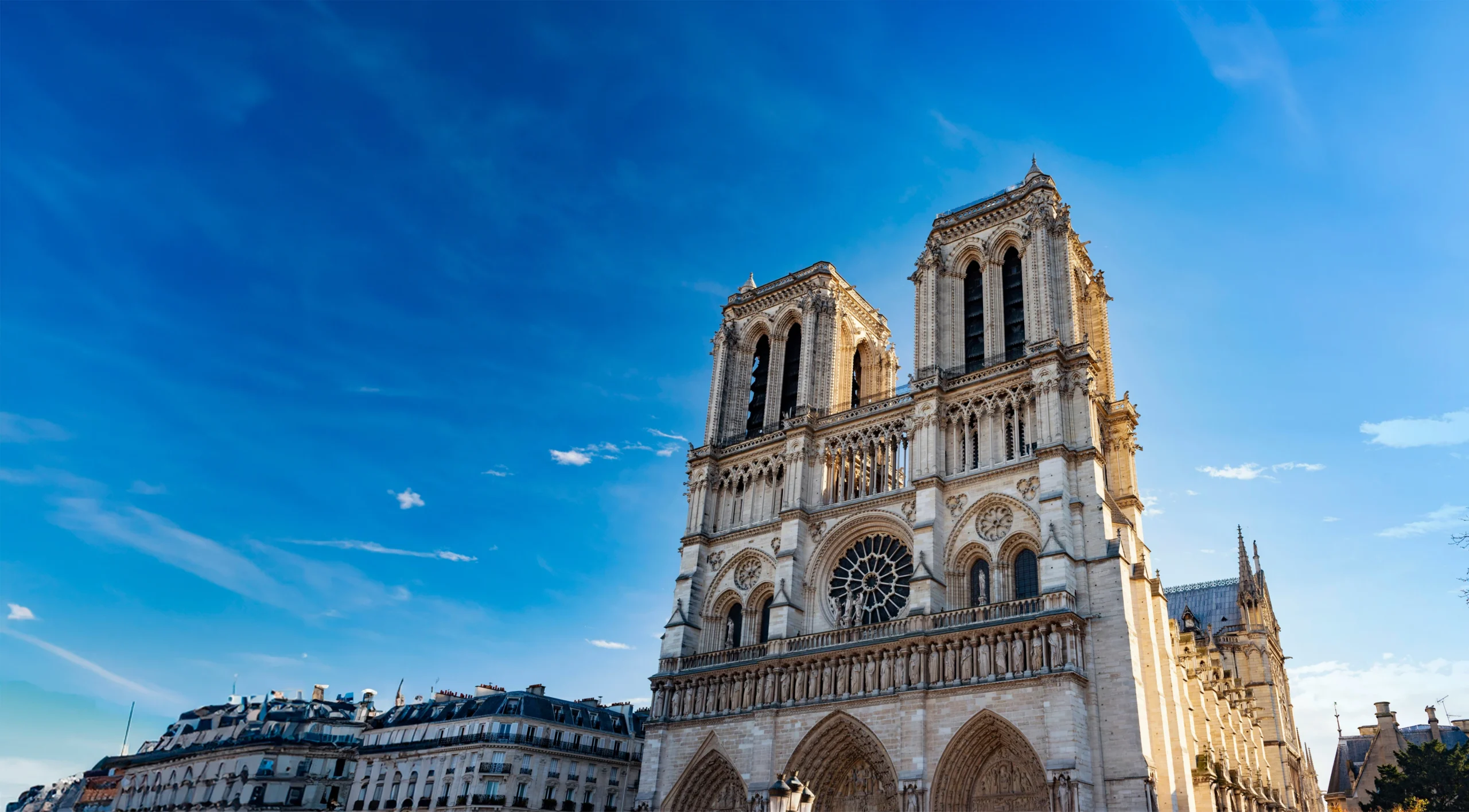
A viral video resurfacing on social media claims that a Muslim terrorist group has threatened to burn Notre Dame Cathedral in Paris unless French authorities release Brahim Aouissaoui.
Aouissaoui, a Tunisian national, killed three people in a terrorist attack at the Notre-Dame basilica in Nice in October 2020. The video shows three masked men issuing an ultimatum and setting a model of the cathedral on fire.
The men display a logo resembling that of Hayat Tahrir al-Sham (HTS), an Islamist group formerly led by Syria’s President Ahmed al-Sharaa. One man says, “Your churches will be burned by God’s will.”
The video has been widely shared on social media, including by European politicians such as Polish MEP Dominik Tarczyński. Screenshots of his post circulated widely, reigniting concerns about the alleged threat.
However, the video is not new. Reverse image searches confirm it first appeared in January 2025 and was promptly debunked. Fact-checkers at France24 noted that the video came from anonymous sources, rather than HTS’s usual communication channels.
The video’s authenticity was questioned because the HTS logo does not match the real one, and the men speak Arabic with an Egyptian accent rather than Syrian. Analysts suggest the clip may have a pro-Russian origin, intended to spread disinformation.
Several media outlets initially reported on the resurfaced video but have since removed their articles. Meanwhile, some social media users shared old footage of the Notre Dame fire in April 2019, claiming terrorists had already attacked the cathedral.
Authorities stressed that these claims are false. The original Notre Dame fire in 2019 was accidental and unrelated to any terrorist activities. The misinformation has continued to circulate despite corrections from news organizations.
Brahim Aouissaoui’s attack in Nice resulted in three deaths. One victim suffered a severe throat injury, which authorities described as an attempted decapitation. The incident occurred just two weeks after the murder of school teacher Samuel Paty by an Islamist extremist.
Aouissaoui was convicted and sentenced to life imprisonment in February 2025. French authorities have consistently linked his attack to Islamic extremism, emphasizing the importance of distinguishing genuine threats from false online content.
Experts urge the public to verify information on social media before sharing, especially content related to terrorism. Misinformation campaigns, such as this resurfaced video, can cause unnecessary panic and mislead audiences about real security threats.
Fact-checkers continue to monitor and debunk similar content to ensure accurate reporting. Authorities advise reporting suspicious or unverified videos to help prevent the spread of false narratives.
The re-emergence of this debunked video underscores the persistent challenge of misinformation on social media and the need for vigilance in distinguishing fact from fiction.
This article was created using automation technology and was thoroughly edited and fact-checked by one of our editorial staff members