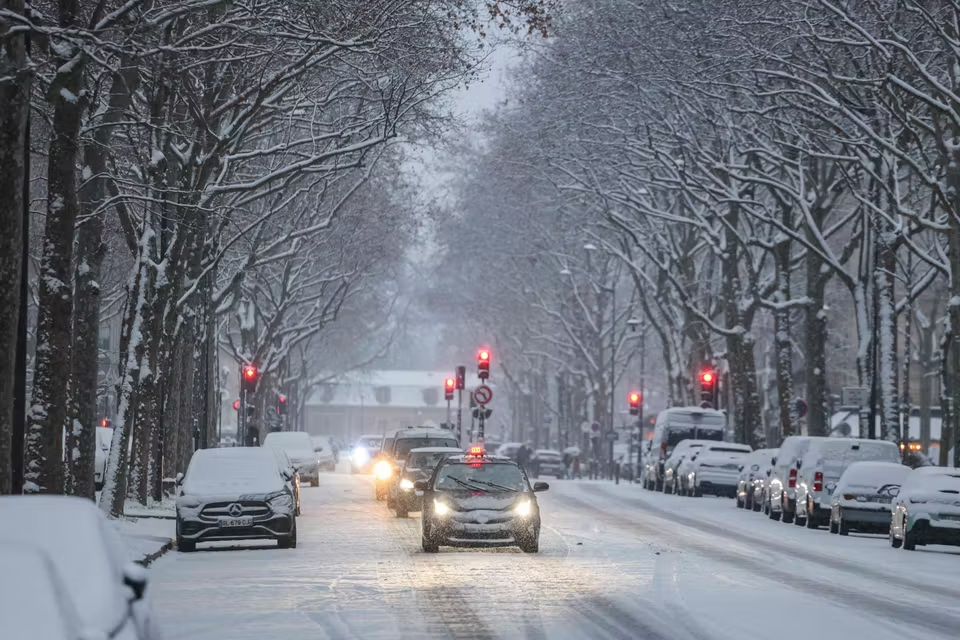
Heavy snowfall and freezing temperatures brought widespread travel disruption across Europe on Wednesday, as storm Goretti swept across the continent, grounding flights, halting road traffic and prompting authorities to issue urgent safety warnings.
In France, around 100 flights were cancelled at Paris’s Charles de Gaulle airport, while a further 40 departures were scrapped at Orly, the capital’s smaller hub. Heavy snow blanketed the Paris region from early morning, forcing bus services to stop just as shoppers prepared for the first day of New Year sales.
Transport officials said most metro and suburban rail lines remained operational, but delays were widespread.
The Météo France weather service placed 38 of the country’s 96 mainland departments on alert for heavy snow and black ice, describing the cold snap as being of “rare intensity for the season.”
Snow accumulations of three to seven centimetres were reported in several areas, and at least six people have died in France since the onset of the extreme weather.
Authorities urged residents in the Paris region to avoid unnecessary travel and work from home where possible. Truck traffic and school buses were banned from roads in roughly a third of France’s administrative departments, mainly in the northern half of the country.
Carrefour chief executive Alexandre Bompard warned the restrictions could disrupt supply chains, particularly fresh food deliveries.
Across the border in the Netherlands, the disruption deepened at Amsterdam’s Schiphol airport, where the national carrier cancelled 600 flights scheduled for Wednesday. It marked the sixth consecutive day of disruption at one of Europe’s busiest aviation hubs.
KLM warned it was running low on aircraft de-icing fluid due to delayed supplies, although airport authorities said sufficient runway de-icing materials remained available.
Belgium also experienced flight cancellations and delays at Brussels airport, as crews worked to de-ice runways and aircraft wings. Dutch authorities advised people to work from home if possible, echoing similar guidance issued in France.
Elsewhere in Europe, snow and ice tightened their grip. Germany saw temperatures plunge below minus 10 degrees Celsius in southern and eastern regions, with large parts of the country covered in snow.
In Britain, the Met Office warned that winter hazards could persist throughout the week. Temperatures in Marham, eastern England, fell to minus 12.5 degrees Celsius, the coldest night of the winter so far.
Severe weather also hit the Western Balkans, where heavy snow and rain closed roads, cut power supplies and caused rivers to flood. In Sarajevo, a woman was killed after a tree collapsed under the weight of wet snow.
Forecasters warned that further snowfall and icy conditions were likely in the coming days, urging travellers across Europe to check transport updates and heed official advice as the continent continues to brace for prolonged winter disruption.