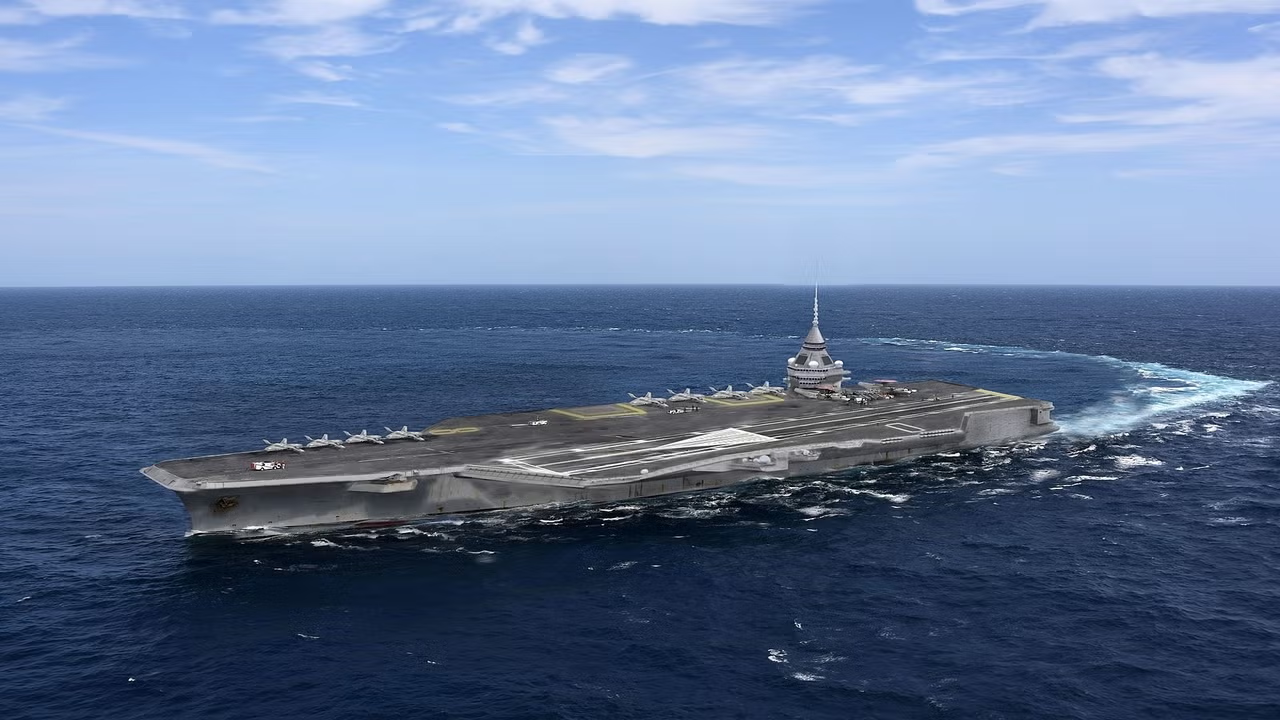
Paris, Île-de-France, France – French Navy explores adding a third electromagnetic catapult to its future carrier to boost sortie rates and ensure continuous operations at sea.
France’s ambitious next-generation aircraft carrier program is entering a critical design phase, with new reports suggesting a major upgrade aimed at significantly enhancing its combat capabilities.
According to defense-focused publications, the planned Porte-Avions de Nouvelle Génération (PANG) could be equipped with three Electromagnetic Aircraft Launch System (EMALS) catapults instead of the initially proposed two.
The move reflects a broader effort by the French Navy to increase operational tempo and maintain strategic relevance in a rapidly evolving global security landscape.
The addition of a third catapult would mark a substantial shift in the design philosophy of France’s future flagship. It underscores the navy’s intent to deliver a more resilient and flexible carrier strike capability, capable of sustaining high-intensity operations over extended periods.
Officials familiar with the program indicate that the enhanced configuration would allow for a higher number of daily sorties, potentially reaching up to 60 missions per day.
This represents a dramatic improvement over France’s current carrier, the Charles de Gaulle, which relies on two steam-powered catapults and operates at a comparatively lower sortie rate.
The existing carrier remains a cornerstone of French naval power, but its limitations have become increasingly evident as modern warfare demands faster deployment cycles and greater operational endurance.
The proposed EMALS upgrade is expected to address these constraints by enabling quicker aircraft launches and reducing mechanical strain associated with older systems.
Unlike traditional steam catapults, EMALS technology uses electromagnetic energy to launch aircraft. This method offers several advantages, including smoother acceleration, reduced wear on airframes, and the ability to launch a wider range of aircraft weights.
These features are particularly important as France prepares to integrate next-generation fighter jets and unmanned systems into its naval aviation fleet.
Defense analysts note that the potential inclusion of a third catapult also enhances redundancy. In high-stakes combat scenarios, the failure of a single launch system can significantly disrupt operations.
By incorporating an additional catapult, the PANG would be better equipped to maintain mission continuity even in the face of technical issues or battle damage.
The reported design adjustment aligns with France’s broader strategic objectives, which emphasize power projection and operational independence.
As geopolitical tensions persist across multiple regions, the ability to deploy a robust and responsive carrier strike group is seen as a critical asset for safeguarding national interests and supporting allied operations.
Furthermore, the move highlights France’s commitment to maintaining its status as a leading naval power within Europe. With only a handful of nations possessing aircraft carriers capable of launching fixed-wing aircraft, advancements in carrier technology are closely watched by both allies and competitors.
Industry experts suggest that the adoption of three EMALS catapults could place the PANG among the most capable carriers in the world.
While details regarding the final design remain under review, the proposed configuration would bring France closer to matching the operational capabilities of larger carrier fleets, particularly in terms of sortie generation and mission flexibility.
The financial and technical implications of the upgrade are also under consideration. Integrating an additional electromagnetic catapult would likely increase both construction costs and engineering complexity.
However, proponents argue that the long-term operational benefits justify the investment, particularly in an era where rapid response capabilities are paramount.
French defense planners are also evaluating how the enhanced carrier will integrate with other elements of the navy’s future force structure.
This includes advanced escort vessels, next-generation submarines, and improved command-and-control systems designed to support network-centric warfare.
The PANG program represents a cornerstone of France’s long-term military modernization strategy. Expected to replace the Charles de Gaulle in the 2030s, the new carrier is being designed to operate for decades, adapting to technological advancements and evolving mission requirements.
In addition to its combat role, the carrier will also serve as a platform for humanitarian missions, disaster response, and diplomatic engagement. Its increased capacity and operational flexibility are expected to make it a versatile tool for both military and non-military missions.
As discussions continue, the potential inclusion of a third EMALS catapult remains a focal point of interest among defense observers. The decision will ultimately depend on a balance between cost, capability, and strategic necessity.
For now, the proposal signals France’s determination to push the boundaries of naval aviation and ensure that its future carrier remains a formidable presence on the world’s oceans.
This article was created using automation technology and was thoroughly edited and fact-checked by one of our editorial staff members