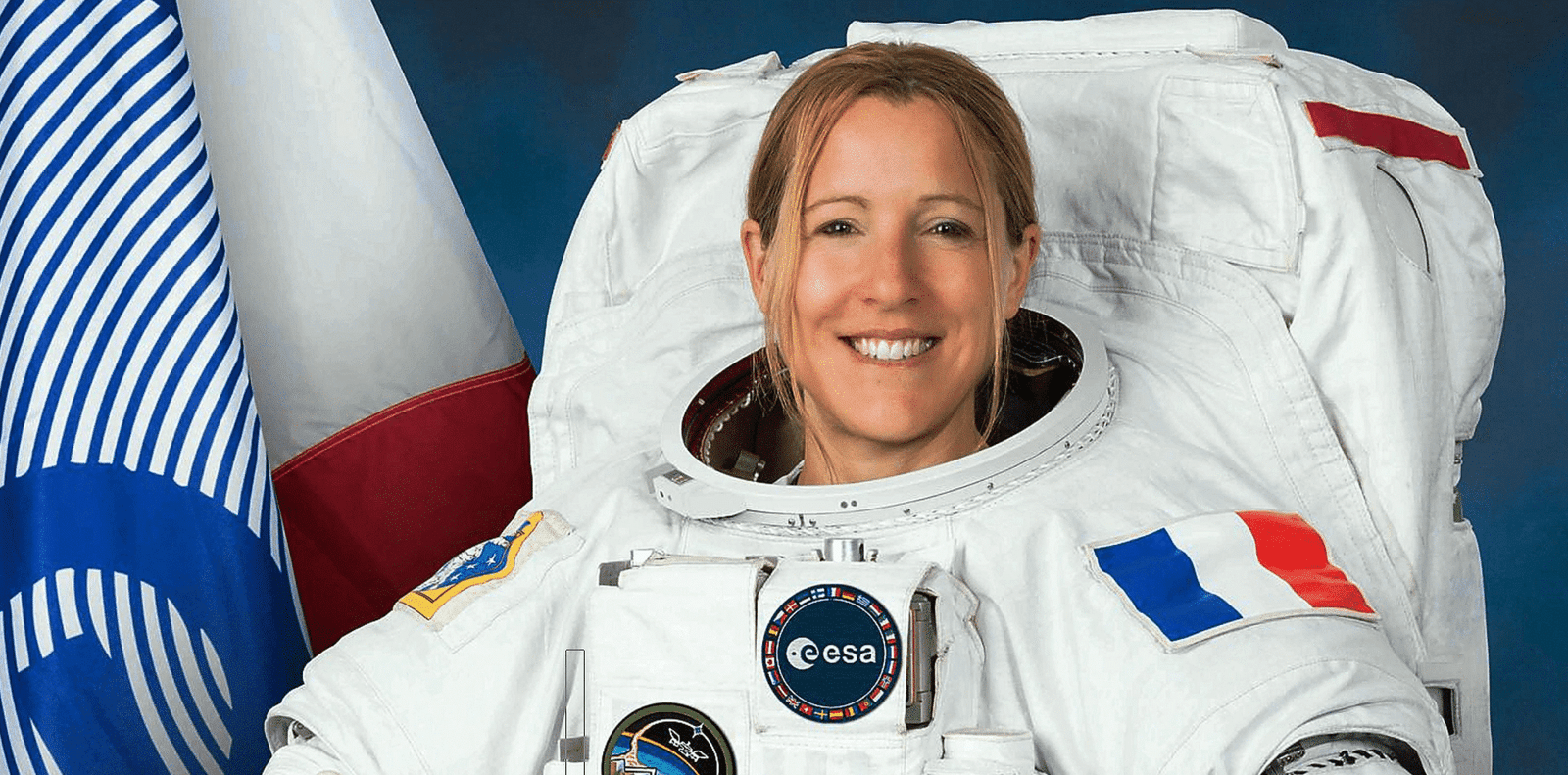
France marked a major milestone in its space ambitions as a French astronaut took center stage in the latest crewed mission to orbit, when NASA launched Crew-12 aboard a SpaceX Falcon 9 rocket from Cape Canaveral Space Force Station.
The spacecraft blasted off at 5:15 a.m. EST, climbing into the early morning sky on a nine-month journey to the International Space Station. Among the four astronauts onboard, French mission specialist Sophie Adenot has drawn particular attention at home and across Europe.
While Crew-12 is an international team, the mission is widely seen in France as a defining moment for the country’s renewed push into human spaceflight. Adenot’s role underscores France’s scientific and technological contributions to orbital research.
The launch had been delayed for two days due to high winds and unfavorable weather along the US East Coast. Once conditions improved, engineers cleared the rocket for liftoff, allowing the crew to begin their carefully timed rendezvous with the station.
Crew-12 also includes American commander Jessica Meir, pilot Jack Hathaway and Russian cosmonaut Andrey Fedyaev. Yet for many observers, Adenot’s participation represents the mission’s symbolic heart.
Adenot flies under the banner of the European Space Agency, reflecting Europe’s broader partnership with the United States in space exploration. For France, however, her journey carries special historical weight.
She becomes only the second French woman ever to reach space, following Claudie Haigneré, who traveled to the Mir space station in the 1990s. That mission inspired a generation — including Adenot herself.
At age 14, she watched Haigneré’s launch and decided she wanted to follow the same path. “It was a revelation,” Adenot said during a recent briefing. “At that moment, I told myself: one day, that will be me.”
A former helicopter pilot and engineer, Adenot brings operational and technical experience that will be crucial during the extended stay. Her responsibilities extend beyond routine station maintenance into leading-edge science.
During the nine-month mission, she is expected to carry out more than 200 scientific and medical experiments. Many of them focus on human health in microgravity, a key priority for Europe’s research agenda.
Among the projects is a system using artificial intelligence and augmented reality to guide astronauts through medical ultrasounds. The goal is to allow crew members to diagnose conditions independently, an innovation that could benefit remote regions on Earth as well.
French officials say the technology highlights the country’s strengths in medical research and aerospace engineering. It also reflects how national expertise feeds directly into international missions aboard the station.
Crew-12 will replace Crew-11, which returned to Earth a month early following the first medical evacuation in the station’s history. Since then, only three astronauts have staffed the orbiting laboratory, limiting scientific output.
Adenot’s arrival, alongside her crewmates, will help restore full operations aboard the ISS, which circles Earth at about 400 kilometers altitude. The station remains one of the world’s most important platforms for scientific collaboration.
However, time is running short for the ageing structure. After more than 25 years of continuous habitation, the ISS is scheduled to be deorbited around 2030 and guided safely into a remote part of the Pacific Ocean.
That timeline gives missions like Crew-12 added urgency. For astronauts such as Adenot, this may be among the last opportunities to conduct long-duration research aboard the historic outpost.
Back in France, her flight has been followed closely by students, scientists and policymakers eager to see the nation’s presence strengthened in future lunar and deep-space programs.
As the Falcon 9 disappeared into the dawn sky, Adenot carried not just experiments and equipment, but the aspirations of a country determined to play a larger role beyond Earth — proving that France’s space story is far from over.