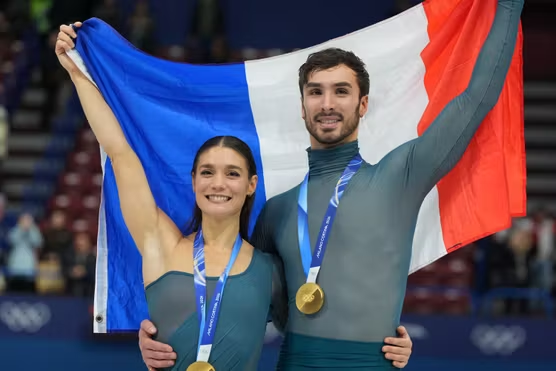
The cheers inside the Milano Ice Skating Arena rose to a deafening pitch as France’s newest ice dance pairing watched their final scores flash on the screen. One season together had ended with the sport’s greatest prize: Olympic gold.
Guillaume Cizeron and Laurence Fournier Beaudry completed a remarkable journey Wednesday, topping the free dance standings and claiming the Olympic title after teaming up only a year ago. Their victory capped a season filled with pressure, reinvention and personal resilience.
The French duo edged reigning world champions Madison Chock and Evan Bates of the United States in a nail-biting finale. Entering the free dance with a narrow 0.46-point advantage, they delivered a routine that widened the gap to 1.43 points.
“It’s quite dizzying when you look back a year ago,” Cizeron told France Televisions. “We’ve faced obstacles, but I’m extremely proud of Laurence and the strength she’s shown.”
For Cizeron, the medal marks a second consecutive Olympic triumph. He previously dominated the discipline alongside Gabriella Papadakis, forming one of the most decorated partnerships in figure skating history before their retirement following the 2022 season.
Their separation, however, was not without turbulence. Weeks before the Games, Papadakis published a book criticizing her former partner and alleging controlling behavior during their years together. Cizeron rejected the claims and announced legal action, creating a cloud of controversy just as he prepared for his Olympic return.
Meanwhile, Fournier Beaudry’s path to the podium was equally complex. Born in Canada, she only secured French citizenship last November, allowing her to compete under the tricolor flag. Her previous partner, Nikolaj Sorensen, had been sidelined following allegations related to a past case, leaving her career in uncertainty.
Their partnership, formed out of friendship and necessity, quickly grew into a powerful competitive force. Coaches praised their chemistry, while fans were struck by the elegance of their lifts and the emotional clarity of their storytelling on ice.
On Wednesday, the Americans skated first, presenting a fiery flamenco routine set to an orchestral version of “Paint It Black” by The Rolling Stones. The performance electrified the arena and briefly placed pressure squarely on the French pair.
But skating last, Cizeron and Fournier Beaudry responded with something quieter and more haunting. Their choreography unfolded to the sweeping score from The Whale, blending delicate edges with daring lifts that seemed to float above the ice. The routine ended in near silence before the crowd erupted.
“It’s a feeling that’s very hard to explain,” Fournier Beaudry said afterward, tears in her eyes. “Every day in training with Guillaume was magical. To see it come together like this is incredible.”
Their composure contrasted with the tension that had defined the season. Coaches noted the duo’s relentless schedule, often training late into the night to refine transitions and perfect synchronization. Every tenth of a point mattered.
Behind them, Canada’s Piper Gilles and Paul Poirier claimed bronze with a lively, theatrical program. Italy’s home favorites Charlene Guignard and Marco Fabbri finished fourth, narrowly missing the podium.
The result reshapes the discipline’s landscape. A partnership barely a year old defeated seasoned rivals who had trained together for more than a decade, proving that trust and artistry can sometimes outweigh longevity.
As medals were presented and the French anthem played, the pair held hands and smiled at each other, a quiet acknowledgment of everything they had overcome.
In a sport built on precision and patience, their rapid ascent may stand as one of the most unlikely triumphs of these Winter Games — a golden moment forged in risk, resilience and belief.