Farmers in southern France escalated protests on Sunday, blocking major roads and spraying manure on government buildings, as outrage grew over the state-ordered culling of cattle to contain lumpy skin disease. Local officials warned of a dangerous escalation and urged Prime Minister Sébastien Lecornu to intervene urgently.
The unrest follows the slaughter of more than 200 cows earlier this week in the village of Les Bordes-sur-Arize, near the Spanish border, after a single case of nodular dermatitis—commonly known as lumpy skin disease—was detected.
The disease, which cannot be transmitted to humans but can be fatal for cattle, first appeared in France in June and has since spread in parts of the south.
Farmers say the government’s response has been excessive and poorly communicated, fuelling anger and despair in rural communities. Demonstrations intensified after police used tear gas to disperse farmers who had gathered to protect the cattle from veterinarians carrying out the cull.
“With each passing hour, indignation and anger are rising inexorably in the face of people’s despair,” said Carole Delga, president of the Occitanie region, which has emerged as the epicentre of the outbreak. In an open letter to Prime Minister Lecornu, Delga called for immediate dialogue with farmers to prevent further confrontation.
She said many French citizens were “shocked” by images of entire herds being slaughtered. “They do not understand the massive use of force by the police,” Delga added, stressing the need to avoid an escalation between authorities and protesters.
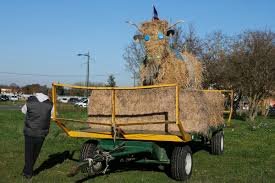
Since Friday evening, farmers have erected roadblocks across the southwest, severely disrupting traffic. The A64 motorway, which runs close to the Spanish border, remained closed for more than 100 kilometres on Sunday. In a symbolic show of defiance, protesters set up makeshift camps along the road, complete with marquees, grills and even a Christmas tree.
Dozens of tractors and trucks were parked near the town of Carbonne, southwest of Toulouse, according to local officials. Near Albi, around 50 farmers blocked the N88 freeway, dumping large quantities of manure at the entrance to the town’s ring road.
Protesters argue that mass culling should not be automatic when only isolated cases are detected, and they are demanding alternative measures, including targeted quarantine, compensation guarantees and greater transparency from health authorities.
The government maintains that drastic measures are necessary to prevent the disease from spreading further and devastating France’s cattle industry. However, the scenes of confrontation and growing public sympathy for farmers have increased pressure on Paris to rethink its approach.
As protests continue, regional leaders and farming unions warn that without swift political intervention and open dialogue, tensions risk spiralling further—threatening not only public order but trust between rural communities and the state.