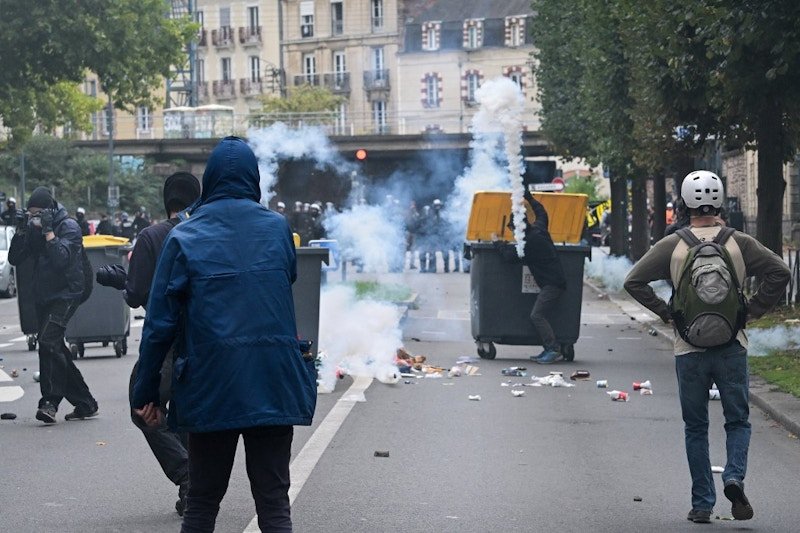
More than one million people took to the streets across France on Thursday, answering the call of major unions to oppose the government’s draft 2026 budget.
The demonstrations, described by the hardline CGT union as “already a success,” marked one of the largest mobilizations in recent years. Union leaders demanded that the government abandon austerity and instead commit to fiscal, social, and environmental justice.
“This is not only about numbers on a page. It is about how people live, work, and survive,” a CGT spokesperson declared during the rally in Paris.
The protests come at a volatile political moment for France. Earlier this month, the government of former Prime Minister François Bayrou collapsed after losing a no-confidence vote on September 8.
The motion of censure centered largely on his proposal for budget cuts totaling 44 billion euros, which opponents argued would undermine public services and deepen inequality.
Following Bayrou’s resignation, President Emmanuel Macron appointed Sébastien Lecornu as the new prime minister. While the change in leadership was intended to ease tensions, many unions and protesters believe Lecornu’s budget plans are merely a continuation of Bayrou’s austerity framework.
Across the country, workers from transport, education, healthcare, and energy sectors joined the strike, leading to disruptions in rail services, school closures, and reduced hospital staffing.
In several cities, public transport was paralyzed, while demonstrations filled central squares with banners, chants, and red flags. Union coalitions insisted that Thursday’s action was only the beginning. Leaders warned the Lecornu government that continued resistance to budget revisions could escalate into further nationwide strikes.
“We demand a fair budget that protects workers, invests in social welfare, and responds to the climate emergency,” said Sophie Binet, head of the CGT, during a fiery speech in Marseille.
Public opinion appears divided. While some citizens expressed frustration at the disruptions caused by the strikes, many voiced solidarity with the unions’ call for greater fairness. “We are paying the price for crises we did not create,” said a 34-year-old teacher marching in Lyon. “We need investment in schools and hospitals, not cuts.”
Government officials have urged calm but remain firm that fiscal discipline is necessary to stabilize public finances. In a televised statement, Prime Minister Lecornu said he respected the right to protest but emphasized that “hard choices” were unavoidable to secure France’s economic future.
Analysts note that Lecornu faces a delicate balancing act. Any major concessions could alienate fiscal conservatives, while refusal to compromise risks further unrest. The coming weeks are likely to prove decisive in determining whether France moves toward reconciliation or renewed confrontation between government and unions.
For now, the images of packed boulevards and striking workers reflect the growing anger over austerity. With unions vowing to maintain pressure, France appears headed for a tense political season centered on the battle over the 2026 budget.