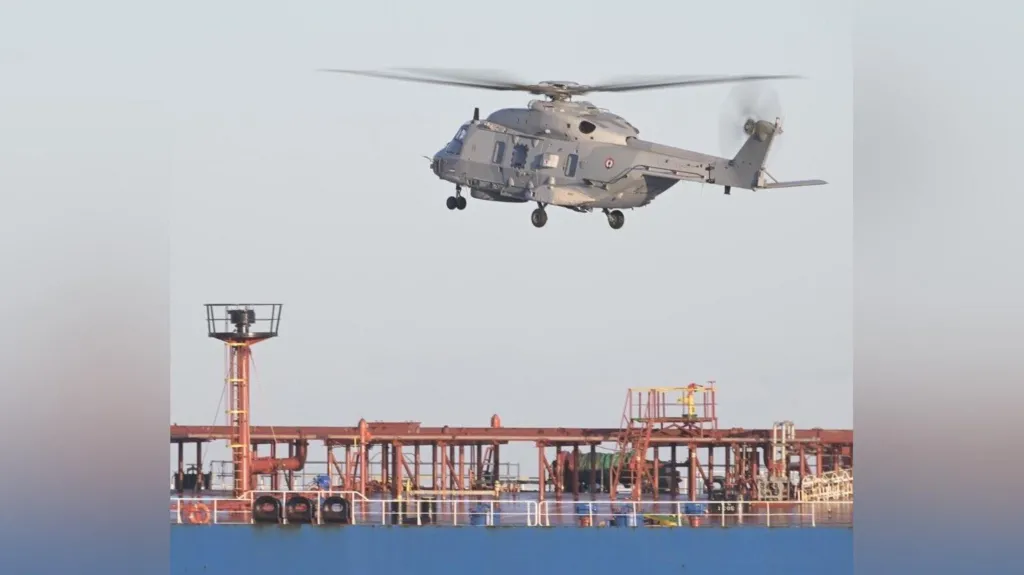
The French navy has seized the oil tanker Grinch in the western Mediterranean Sea in a major operation targeting Russia’s so-called “shadow fleet,” officials said this week.
The move is part of escalating efforts by Western nations to enforce sanctions aimed at cutting off revenue streams used to finance Russia’s ongoing war in Ukraine.
President Emmanuel Macron announced on X that French forces intercepted and boarded the vessel on January 22 in international waters between Spain and Morocco.
The operation, carried out under the United Nations Convention on the Law of the Sea, identified Grinch as subject to international sanctions and suspected of flying a false flag — a tactic often used by shadow fleet tankers to evade detection and legal restrictions.
The tanker, which had departed from Russia’s Arctic port of Murmansk, was sailing under the flag of the Comoros Islands.
French maritime authorities said the inspection of the ship’s paperwork raised serious doubts about the flag’s legitimacy, prompting the diversion of the vessel to an anchorage for further inquiry.
The United Kingdom provided tracking and monitoring support for the mission, with British naval assets shadowing the tanker through the Strait of Gibraltar before French commandos executed the boarding.
UK Defence Secretary John Healey said allied forces are intensifying their response to shadow vessels “to choke off the funds that fuel Putin’s illegal invasion of Ukraine.”
French authorities have opened a judicial investigation into the Grinch’s operations, focusing on suspected sanction breaches and the legitimacy of the vessel’s flag.
Maritime law experts note that ships operating under false flags can be treated as stateless, giving intercepting states legal grounds to board and seize them.
The seizure of Grinch follows a series of similar actions by Western allies. Earlier this month, United States forces intercepted another sanctioned tanker in the Atlantic, part of broader measures to enforce price caps and restriction regimes on Russian oil exports.
Ukrainian President Volodymyr Zelensky welcomed the French action, saying it exemplifies the resolve needed to prevent Russian oil from financing its war machine. He urged further measures, including the confiscation and sale of oil carried by such vessels.
Moscow has criticized these operations. The Russian embassy in Paris said it had not been informed prior to the seizure and questioned the legality of the boarding, echoing earlier condemnations of similar intercepts.
Kremlin officials argue that proper registration and notification are required under international maritime norms.
The Grinch case highlights the growing use of long-range, opaque tanker networks by sanctioned states to bypass financial penalties.
Analysts estimate hundreds of vessels make up the global shadow fleet, which uses frequent reflagging, obscure ownership structures, and minimal transparency to conceal shipments of oil to markets in Asia and elsewhere.
As enforcement intensifies, France and its allies are signaling that economic pressure alone is no longer sufficient — physical interdictions at sea are now a key component of sanction strategies.