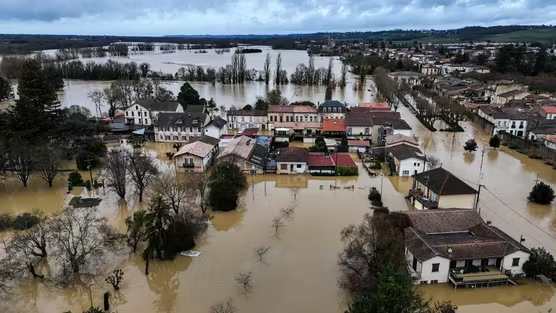
France’s longest stretch of continuous rainfall on record has unleashed widespread flooding across its western regions, leaving one man missing in the swollen Loire River and forcing multiple towns to activate emergency response plans.
Authorities said the country marked its 35th straight day of rain on Wednesday, surpassing all previous records since national measurements began more than six decades ago. The unrelenting downpours have saturated soil, pushed rivers beyond their banks, and heightened fears of further destruction as another Atlantic storm approaches.
According to Météo-France, this sequence of wet days is the longest recorded since 1959. Meteorologists warned that the combination of saturated ground and incoming rainfall significantly increases the risk of flash flooding and dangerous currents.
Four departments in western France were placed under the highest red alert for flooding, with nine more on orange alert. Emergency services across the region have been mobilized as officials prepare for worsening conditions linked to Storm Pedro, forecast to sweep across parts of western Europe in the coming days.
The most immediate concern remains the disappearance of a canoeist in the small town of Chalonnes-sur-Loire. The man capsized Tuesday evening while navigating the turbulent river, according to regional authorities.
Senior official François Pesneau said rescue crews were deployed quickly but faced treacherous conditions. Strong currents and near-freezing water temperatures have complicated the search.
“We are deploying resources, but there is objectively very little chance of finding this person,” he told reporters, describing the river as exceptionally dangerous after days of heavy rainfall.
Further south, city leaders have scrambled to limit damage. In Bordeaux, Mayor Pierre Hurmic activated the municipality’s emergency plan for the first time since devastating floods struck the city in 1999.
The plan includes monitoring levees, reinforcing vulnerable areas, and coordinating with firefighters and volunteers to assist residents. Officials are also advising people living near riverbanks to prepare for possible evacuations.
“We must anticipate the worst while hoping for the best,” Hurmic said, urging residents to remain cautious and follow safety instructions.
Elsewhere, historic towns are already seeing water invade their streets. In Saintes, several central roads were submerged on Wednesday as river levels crept higher. Water reached the base of the Arch of Germanicus, a Roman-era monument that once marked the city’s entrance.
Local officials reported around 50 streets underwater and approximately 900 homes affected. Sandbags and temporary barriers have been placed around shops and residences, while emergency crews go door to door checking on elderly residents.
Mayor Bruno Drapron warned that the crisis is far from over. “The flood peak is not expected before Saturday or Sunday,” he said, noting that additional rainfall could prolong the emergency well into next week.
Transport has also been disrupted. Several secondary roads are impassable, and train services in low-lying areas have been slowed or suspended as a precaution. Schools in the most vulnerable communities have closed temporarily to ensure student safety.
Climate experts say the prolonged wet spell reflects a broader pattern of increasingly extreme weather events across Europe. Warmer air holds more moisture, leading to longer and heavier periods of rainfall that strain drainage systems and river basins.
For residents, the immediate focus remains practical: moving belongings to higher ground, protecting homes, and staying informed. Emergency messages have urged people not to attempt crossing flooded roads or waterways.
As Storm Pedro approaches, forecasters caution that any additional precipitation could tip already swollen rivers into critical levels. Rescue teams continue their search along the Loire, while communities brace for more rain in a week that has already rewritten France’s weather records.
For now, the country watches the skies, hoping the next break in the clouds finally arrives.