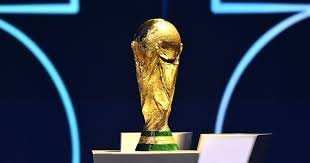
The French government has said it is not in favor of boycotting this year’s football World Cup finals, despite mounting political pressure linked to tensions with the United States over Greenland.
Speaking on Tuesday, January 21, France’s Sports Minister Marina Ferrari dismissed calls for a boycott, stressing that sport should not be dragged into geopolitical disputes.
“As it stands now, there is no desire from the ministry for a boycott of this great competition,” Ferrari told reporters. While acknowledging that some political figures had voiced opposition to France’s participation, she underlined her belief in keeping sport and politics separate.
“The World Cup is an extremely important moment for those who love sport,” she added.
The controversy follows remarks by US President Donald Trump, who has reportedly targeted France among several European countries with possible tariff threats over their opposition to his drive to annex Greenland, an autonomous territory of Denmark.
Trump’s stance has sparked outrage across parts of Europe and reignited debate over whether political actions should influence participation in major sporting events.
In France, senior left-wing politician Eric Coquerel has emerged as one of the strongest advocates for a boycott. Coquerel argued that the United States should be stripped of its role as co-host of the World Cup, which will also be staged in Canada and Mexico.
“Seriously, does one imagine going to play the World Cup in a country that attacks its ‘neighbors,’ threatens to invade Greenland, and destroys international law?” he asked.
The debate has extended beyond French politics. Veteran French coach Claude Le Roy, who famously guided Cameroon to victory in the 1988 Africa Cup of Nations, suggested African teams should also consider boycotting the tournament.
“Does Donald Trump deserve to host a football World Cup? I don’t think so, and it’s time people spoke up,” the 77-year-old told Le Monde.
Germany, however, has taken a more hands-off approach. Christiane Schenderlein, Germany’s state minister for sports, said decisions on boycotts do not rest with politicians.
“Decisions on participation or boycotts at major sporting events lie solely with the competent sports associations,” she said, pointing to the German Football Association and FIFA as the responsible bodies.
FIFA itself has so far shown no sign of wavering. Its president, Gianni Infantino, has cultivated a close relationship with Trump and even created a special “FIFA Peace Prize,” which he awarded to the US president during the World Cup draw in December.
With the tournament scheduled to run from June 11 to July 19, pressure on FIFA and national associations is likely to intensify. For now, France’s official position remains clear: despite political turbulence, the government sees no reason to boycott football’s biggest global spectacle.