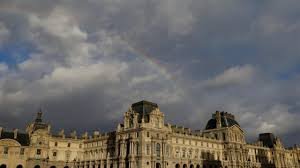
The Louvre Museum found itself at the centre of global attention once again last month—not for a heist or an exhibition, but for a burst pipe that sent water leaking over part of its rare book collection.
Although the incident was contained within minutes, it sparked a very different kind of damage online: a flood of AI-generated disinformation that quickly overshadowed the real event.
According to museum officials, the leak occurred in a climate-controlled storage area typically closed to the public. A water pipe malfunctioned, allowing droplets to fall onto shelves containing rare books and archival materials.
Staff members responded immediately, removing the affected volumes and deploying dehumidifying equipment to prevent long-term deterioration.
“The situation was isolated and brought under control rapidly,” the museum confirmed, emphasising that only a limited number of items required specialised treatment.
But within hours, distorted narratives began circulating online. Several AI-generated images and fabricated posts claimed that priceless artworks—including the Mona Lisa—had been “soaked,” “warped,” or “destroyed.”
Others alleged a large-scale infrastructural collapse, suggesting the museum was “flooded” or “on the verge of closure.” None of those claims were true.
Media analysts at Euronews’ Truth or Fake programme found that the speed and scale of false content suggested coordinated use of generative AI tools. “What we’re seeing is a shift,” one analyst explained.
“Instead of relying on old rumours, disinformation actors are now creating highly convincing fake visuals and pairing them with dramatic narratives. The Louvre leak became the perfect opportunity.”
Some posts went further, pushing conspiratorial versions of events, such as claims that the museum was covering up “massive damage” or that the leak was sabotage. Relatively mundane maintenance reports were misrepresented as evidence of structural failure. By the time fact-checkers intervened, many of the posts had accumulated millions of views.
Museum conservation experts stress that while leaks pose genuine risks to delicate materials, exaggerations can undermine public understanding of how such institutions operate. “People assume catastrophe because they don’t see the constant, everyday work of preservation,” one curator said.
“A leak is serious, but we prepare for these scenarios. What’s harder to control is misinformation.”
The Louvre has since restored the affected area and continues treating a handful of books using conventional conservation methods. No major artworks were impacted, and public galleries have remained open without interruption.
However, the incident has revived discussions around digital literacy and the challenges posed by AI-generated disinformation. As cultural institutions increasingly find themselves targets of online manipulation, experts argue for more proactive measures—transparent communication, rapid fact-checking, and digital education for visitors and the broader public.
In the end, the Louvre’s water leak was a manageable physical event. The bigger storm, it seems, brewed online, revealing how even minor incidents can be transformed into viral falsehoods in the age of generative AI.