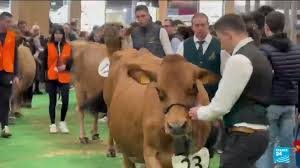
Europe’s largest agricultural show will open its doors in Paris this year without one of its most iconic attractions: cows.
Organisers of the annual Paris Agricultural Show confirmed the unprecedented decision following an outbreak of lumpy skin disease (LSD) in France, raising fears that the highly contagious virus could spread among livestock.
The show, which traditionally draws more than 600,000 visitors and showcases thousands of animals from across the country, has long been a celebration of French farming culture. Cattle, often paraded proudly by breeders, are usually at the heart of the event.
Their absence this year marks a stark departure from tradition and underlines the seriousness of the health concerns.
Lumpy skin disease, a viral infection that primarily affects cattle, causes fever, skin nodules and a drop in milk production. While it poses no direct risk to humans, it can have severe economic consequences for farmers due to trade restrictions, production losses and the costs of containment.
The disease, previously confined largely to Africa and parts of the Middle East, has in recent years spread into southern and eastern Europe.
French agricultural authorities said the decision to exclude cows was taken as a precautionary measure to prevent any risk of contamination, particularly given the dense concentration of animals and visitors at the show.
“Protecting animal health and safeguarding farmers’ livelihoods must come first,” an official from the agriculture ministry said.
Other livestock species, including sheep, goats and pigs, will still be present, though under tightened biosecurity rules. Organisers have introduced enhanced sanitation measures, restricted animal movement and increased veterinary inspections throughout the event.
The move has been met with mixed reactions from farmers. Some breeders expressed disappointment at losing a key opportunity to showcase their animals, compete for prizes and connect with buyers.
Others, however, acknowledged the necessity of the decision. “It’s painful not to bring our cows to Paris,” said one dairy farmer from Normandy, “but a wider outbreak would be far worse.”
Economists note that the absence of cattle could also affect the show’s commercial appeal, as many sponsors and visitors are drawn by the traditional livestock displays.
Still, organisers insist the event will go ahead with a strong programme focused on agricultural innovation, sustainability, regional produce and debates on the future of farming.
The outbreak has renewed calls for stronger European coordination on animal disease surveillance and prevention.
With climate change and increased animal movement heightening the risk of cross-border infections, experts warn that similar disruptions could become more frequent.
As the Paris Agricultural Show opens without its emblematic cows, the empty stalls serve as a visible reminder of the vulnerabilities facing modern agriculture — and the difficult balance between preserving tradition and protecting animal health.