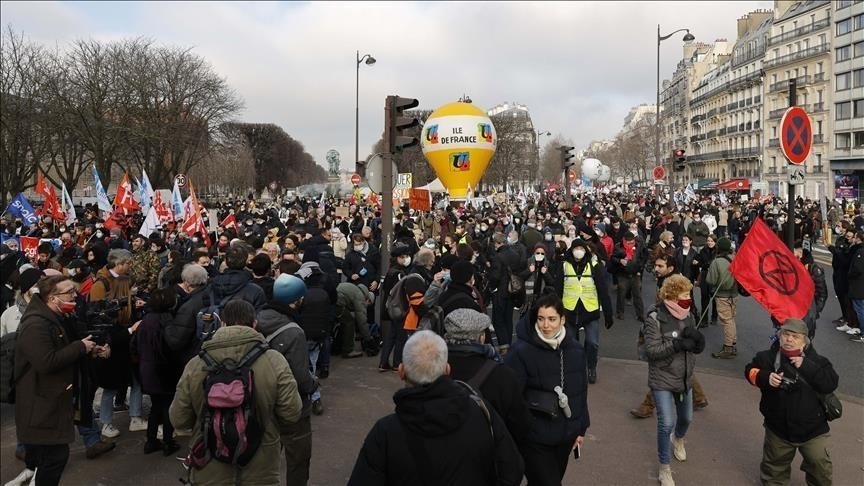
Teachers across the Paris region walked out of classrooms Tuesday, launching coordinated strike action against planned job cuts that unions say threaten to undermine France’s already strained public education system.
The protest spread across Île-de-France, where educators from multiple districts refused to report to work and instead joined demonstrations in the capital. Organizers said the action aimed to pressure the government into reversing its decision to eliminate thousands of teaching posts.
According to broadcaster CNews, the government intends to scrap 4,000 teaching positions nationwide for the 2026 school year as part of broader budget tightening measures. The announcement has triggered widespread anger among unions and staff.
Teachers from Paris, Créteil and Versailles gathered early in the morning before marching through the streets toward the Ministry of National Education headquarters. Many carried placards reading “More staff, not cuts” and “Schools cannot run on shortages.”
Union representatives said the reductions would worsen already difficult working conditions. In several schools, teachers reported larger class sizes, fewer support staff and increasing administrative burdens even before the planned cuts take effect.
“Everywhere, in schools and institutions, in classrooms, in student life, in services, we need more staff to ensure a quality public service,” one teachers’ spokesperson said during the march. “These cuts move us in the opposite direction.”
Educators argue that fewer teachers will mean overcrowded classrooms and less individual attention for pupils. Specialized support roles, including counselors and aides for students with learning difficulties, could also be affected.
Many warn that vulnerable communities will suffer most. Priority education zones, which serve lower-income neighborhoods, often rely on additional staff and smaller classes to support struggling students. Teachers say the job losses could undo years of progress in those areas.
Strike action had already begun in some Paris schools earlier this month, with limited walkouts on February 10. Tuesday’s demonstration marked the first large-scale regional mobilization and signaled the possibility of broader nationwide protests.
Parents arriving at closed school gates expressed mixed reactions. Some voiced frustration at last-minute disruptions, while others said they supported the teachers’ demands. “If they don’t fight now, conditions will only get worse for our children,” said one mother outside a primary school in eastern Paris.
Union leaders accuse the government of targeting public education while private institutions remain largely unaffected. They say the disparity risks widening inequalities between families who can afford private schooling and those who depend on state-run schools.
Officials, meanwhile, have defended the plan as a necessary adjustment based on demographic trends and budget constraints. They argue that declining student numbers in certain areas justify a reduction in staff, though teachers counter that needs remain high in urban regions.
By midday, thousands of protesters had filled the streets near the ministry building, chanting slogans and calling for “the immediate cancellation” of the cuts. Organizers vowed further action if authorities fail to respond.
For many educators, the strike is about more than job numbers. They say it reflects a broader struggle over the future of France’s public education model and whether it will continue to provide equal opportunities for all students.
As negotiations loom, teachers insist they are prepared to continue mobilizing. “We are defending our profession,” one marcher said, “but above all, we are defending our students and the quality of their education.”
This article was created using automation technology and was thoroughly edited and fact-checked by one of our editorial staff members